


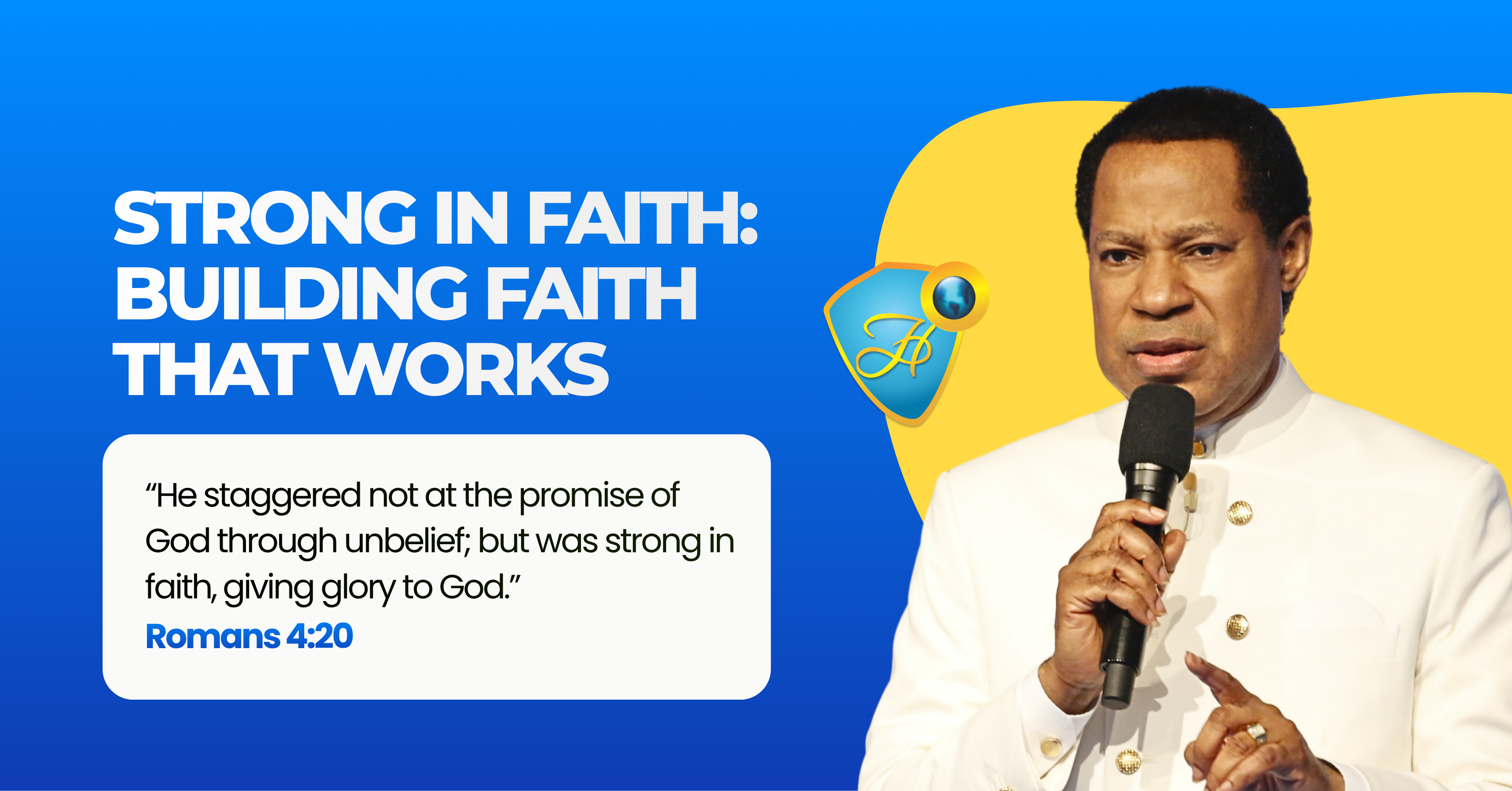
STRONG IN FAITH: BUILDING FAITH THAT WORKS
Faith is one of the most talked-about subjects in Christianity, yet many believers still struggle to understand why their faith sometimes seems ineffective. Some know the Scriptures thoroughly, can quote verses effortlessly, and even teach others; yet when challenges arise, fear, doubt, and discouragement take over. Why? Because faith is not strengthened merely by hearing the Word—it becomes powerful through acting on the Word.
The Bible distinguishes between weak faith and strong faith. Weak faith knows what God has said but hesitates to act on it. Strong faith, however, refuses to be moved by circumstances and stands firmly on God’s Word regardless of outward appearances. This article explores the difference between weak faith and strong faith, the dangers of unbelief, and how believers can develop a faith that produces results.
WEAK FAITH: KNOWING WITHOUT ACTING
The Bible says concerning Abraham in Romans 4:19: “And being not weak in faith, he considered not his own body now dead…”
Weak faith is not necessarily the absence of Bible knowledge. In fact, many people with weak faith know the Scriptures very well. The problem is not a lack of information but a lack of action. A believer may boldly declare, “The Bible says by His stripes we were healed,” yet continue to speak defeat, fear, and hopelessness. Another may claim to trust God for provision while constantly worrying and complaining. This contradiction reveals weak faith.
Weak faith occurs when:
• You know God’s Word but refuse to act on it.
• You allow circumstances to speak louder than Scripture.
• You ask God repeatedly for what He has already promised.
• You focus more on symptoms, fear, and impossibilities than on God’s truth.
Weak faith wavers when pressure comes. It asks for signs, proof, and reassurance before believing. Instead of standing confidently on God’s promise, it becomes unstable and fearful. And yes, this is where many believers unintentionally sabotage themselves. They pray today, believe for ten minutes, and panic tomorrow. Faith doesn’t work like a Wi-Fi signal that disconnects every time pressure increases.
The cure for weak faith is simple: ACT ON GOD’S WORD.
Faith grows stronger through practice. Just as physical muscles become stronger through exercise, faith develops through consistent obedience to God’s Word. The Bible says in 1 Thessalonians 5:18: “In everything give thanks…” To act on this verse means choosing thanksgiving even in difficult situations. It means praising God before the answer appears. That is faith in action.
Similarly, Philippians 4:6-7 says believers should be anxious for nothing but should pray with thanksgiving. Acting on this Scripture means refusing anxiety after praying. It means rejecting fear and accepting God’s peace. Faith is not passive agreement; faith is active response.
STRONG FAITH: THE FAITH THAT WORKS
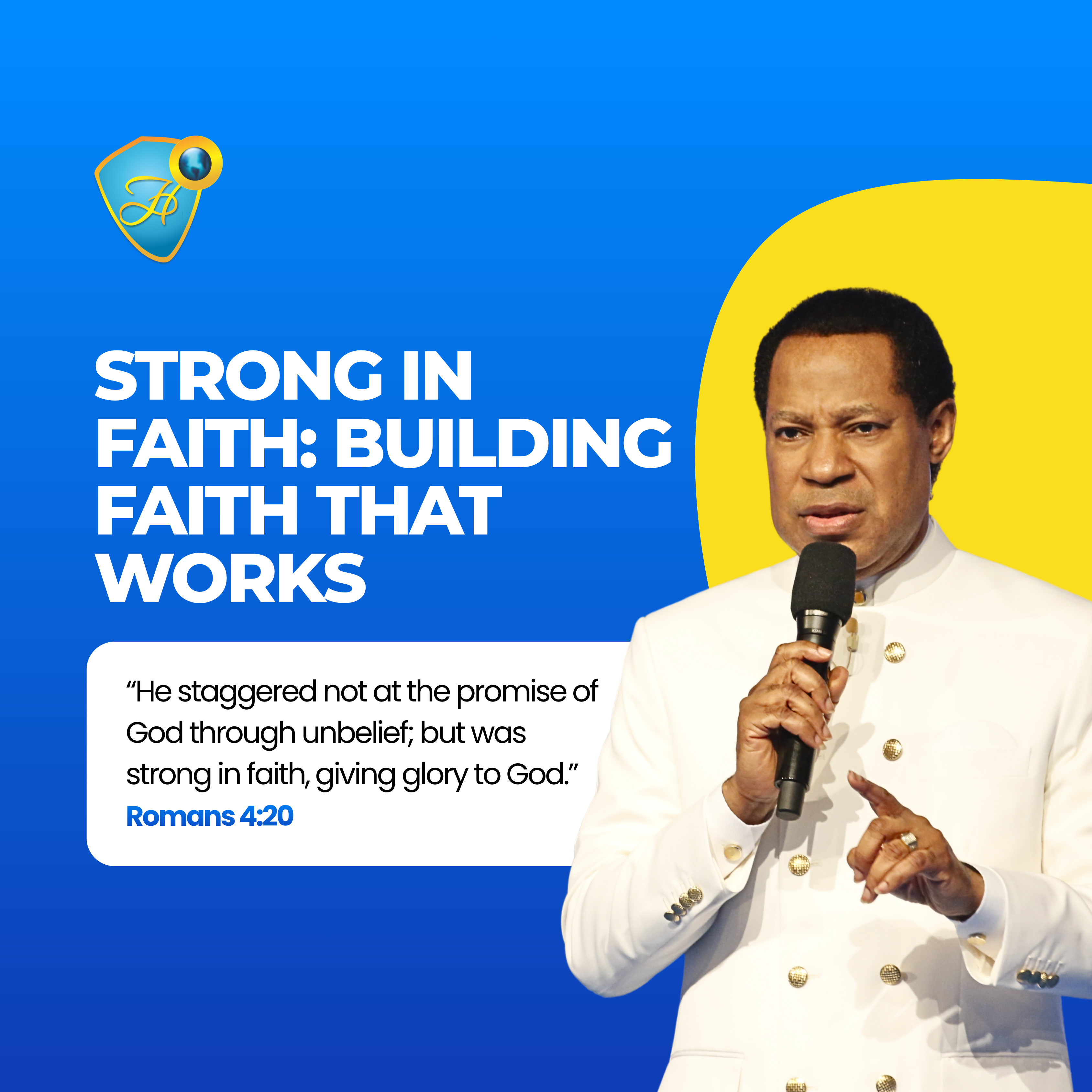
Romans 4:20 describes Abraham as: “Strong in faith, giving glory to God.” Strong faith has distinct characteristics.
STRONG FAITH GIVES GLORY TO GOD
Strong faith praises God before the manifestation appears. Abraham glorified God long before Isaac was born. Though circumstances appeared impossible, he rejoiced because he trusted the integrity of God’s Word. Strong faith worships while waiting.
Instead of worrying and being negative, it says: “God has already done it.” “His Word cannot fail.” “What He promised will surely come to pass.”
This kind of faith does not depend on feelings or visible evidence. It depends entirely on God’s faithfulness.
STRONG FAITH REFUSES TO CONSIDER CIRCUMSTANCES
The Bible says Abraham: “Considered not his own body now dead… neither yet the deadness of Sarah’s womb.” Abraham was fully aware of the natural facts. He knew his age. He knew Sarah was barren. But he refused to let those realities override God’s promise.
Faith does not deny circumstances exist. Faith simply refuses to allow circumstances to have the final authority. Strong faith says: “I see the situation, but I trust God’s Word more.” “I feel pain, but I refuse to let pain define my future.” “The doctors may have spoken, but God has spoken too.”
This is where many believers get it wrong. They spend more time meditating on problems than on God’s promises. Fear dominates whatever occupies the mind continually, but strong faith keeps your mind focused on God’s Word.
Weak faith hears God’s Word but hesitates to act. Strong faith acts on the Word regardless of circumstances. Abraham became the father of faith because he refused to stagger in unbelief. He gave glory to God, ignored contrary evidence, and became fully persuaded that God was faithful to perform what He promised. Believers today are called to develop that same kind of faith.
God’s Word is dependable. His promises are certain. When believers choose to trust Him completely, refusing to be moved by fear or outward appearances, they will discover what Abraham discovered long ago:
STRONG FAITH WORKS.